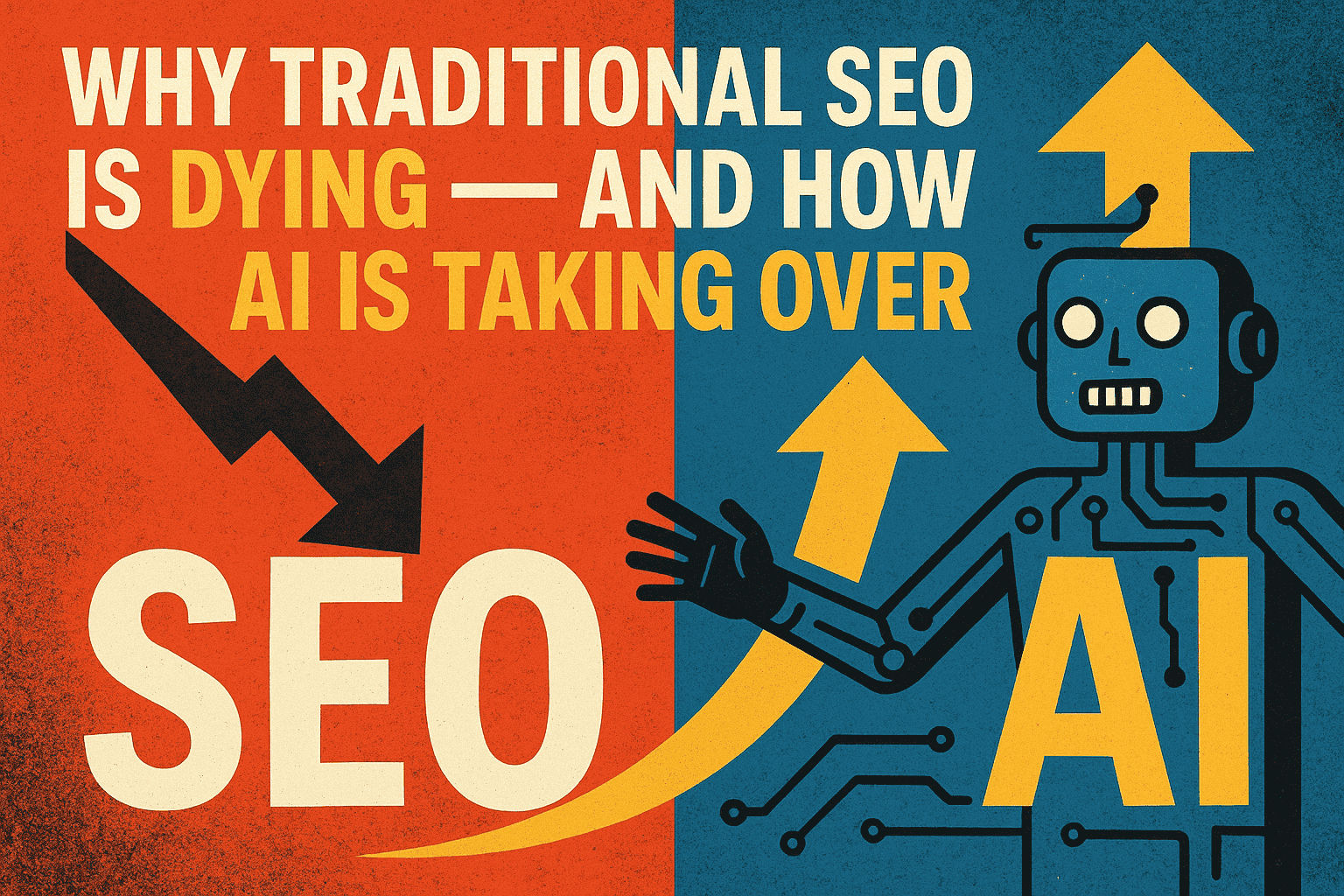
Search Engine Optimization (SEO) has long been the foundation of digital visibility. How AI Is Taking Over for over two decades, marketers have optimized keywords, backlinks, and meta tags to climb Google’s results pages. But in 2025, the rules of the game are changing — drastically. The rise of Artificial Intelligence (AI) in search, led by Google Gemini, ChatGPT Search, and Perplexity.ai, has transformed how content is ranked, discovered, and consumed.
This shift marks the end of traditional SEO and the rise of AI-driven optimization — a smarter, intent-based system that rewards relevance, expertise, and authenticity over keyword stuffing or link spamming.
In this article, we explore why traditional SEO methods are losing effectiveness and How AI Is Taking Over, you can future-proof your strategy with AI-first optimization.
The Evolution of Search: From Keywords to Intent
In the early 2010s, search engines rewarded keyword density. Marketers learned to repeat keywords like “best smartphones 2025” dozens of times to achieve rankings. But as AI advanced, algorithms began to understand context, user intent, and semantic meaning — the why behind every search.
Today, Google’s AI systems such as RankBrain, BERT, and Gemini don’t just read words; they interpret what the user is looking for. Instead of favoring sites with the most keywords, they prefer content that provides the most value and accurate answers.
Traditional SEO is dying because it focused on keywords; AI SEO focuses on understanding human behavior.
How AI Is Reshaping the SEO Landscape
1. Search Engines Are Now “Answer Engines”
Modern users no longer want to browse ten blue links — they want instant answers. AI-powered systems like Perplexity and ChatGPT Search directly generate responses using data from trusted sources.
That means your goal is no longer just ranking on page one — it’s to be cited or referenced by AI as a reliable source. This new practice is known as Generative Engine Optimization (GEO).
2. Personalization Is Powered by Machine Learning
AI analyzes millions of data points to predict what each user wants next. Search results are becoming hyper-personalized — no two users see exactly the same thing.
To stay visible, businesses must produce authentic, data-backed, and high-quality content that adapts to multiple user intents, not one keyword formula.
3. Voice and Visual Search Are Taking Over
AI voice assistants and visual tools (like Google Lens) are redefining search behavior. People now say, “Show me nearby vegan restaurants” instead of typing “vegan restaurant near me.”
This means SEO must evolve toward conversational and multimodal optimization, where voice, video, and image content play central roles.
4. AI Detects Manipulation Instantly
Old SEO tricks — keyword stuffing, fake backlinks, spun content — are obsolete. AI algorithms can detect manipulation patterns with near-perfect accuracy.
Only authentic, original, and human-quality writing earns long-term visibility.
The Rise of AI-Powered SEO: What It Means for You
Content Optimization Becomes Contextual
AI SEO tools such as SurferSEO, Frase, and NeuronWriter analyze semantic intent and help you write content aligned with natural language processing (NLP).
Rather than guessing which keyword to use, AI tools suggest topic clusters, questions, and entities that align with how people actually speak and search.
Data-Driven Decision Making
With predictive analytics, AI SEO platforms can forecast which keywords, topics, or content types are likely to trend. This enables proactive planning instead of reactive publishing.
AI Tools as Partners, Not Replacements
AI can’t replace creativity or human empathy. It can, however, enhance your productivity by analyzing trends, automating optimization, and helping you structure content that satisfies both algorithms and readers.
Why Traditional SEO Fails in the AI Era
- Keyword-First Approach Is Outdated
AI prioritizes topics and meaning — not raw keyword frequency. - Link Quantity Over Quality Doesn’t Work
Backlinks now carry weight only if they come from trusted, contextually relevant domains. - Ignoring Structured Data
Without schema markup, AI engines can’t interpret your page correctly. - Static Content Loses Value
AI rewards dynamic, regularly updated pages with verified information. - User Experience (UX) Neglect
Poor mobile design, intrusive ads, or slow load speeds directly impact rankings.
How to Adapt: The AI SEO Strategy for 2025 and Beyond
1. Focus on Topical Authority
Group related content into topic clusters — for example:
- Main Pillar: AI Marketing Guide
- Cluster Posts: AI Tools for SEO, AI in Content Creation, How to Train AI Models
This structure signals expertise and depth, allowing AI engines to trust your site as an authority.
2. Optimize for AI Search Engines
Ensure your website allows crawling by:
- ChatGPTBot
- PerplexityBot
- Google-Extended
Include schema markup and structured data so AI systems can understand, cite, and reference your content.
3. Build Trust Through E-E-A-T
Show Experience, Expertise, Authoritativeness, and Trustworthiness by:
- Adding author bios and credentials
- Citing reliable sources (e.g., Google AI Blog)
- Maintaining transparent contact and about pages
4. Create Conversational, Human-Centric Content
Use natural phrasing and question-answer formatting. Include FAQs like:
- “How is AI changing SEO?”
- “Will AI replace keyword research?”
- “How to optimize for AI-generated answers?”
These structures improve visibility in voice search and AI responses.
5. Use Predictive and Generative Tools
Adopt AI-powered writing tools such as:
- Jasper AI – for SEO-driven content outlines
- MarketMuse – for topic gap analysis
- SurferSEO – for NLP keyword optimization
They help balance creativity with machine-readability.
The Future of Search Is Generative
Traditional SEO is not disappearing — it’s evolving into AI SEO. The new approach is about training AI systems to understand, trust, and quote your content rather than just ranking it on page one.
This era demands Generative Engine Optimization (GEO) — the process of ensuring AI-generated search results cite your brand. Businesses that master GEO will dominate visibility across AI chatbots, smart search, and voice assistants.
The faster you adapt, the stronger your digital presence becomes.