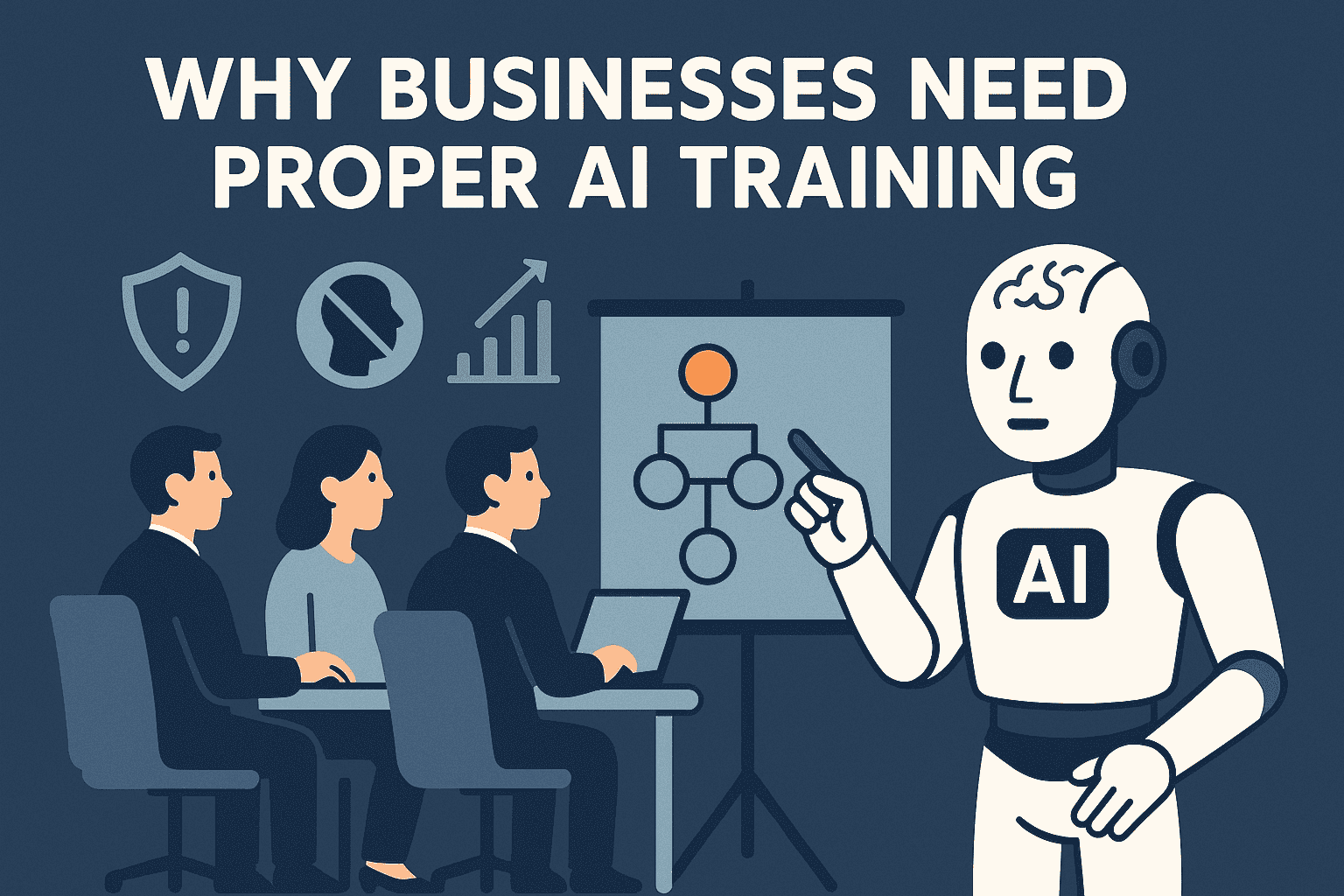
Artificial Intelligence (AI) is transforming the way organizations operate, compete, and grow. However, the mere adoption of AI tools is not enough to ensure success. Businesses require proper AI training to maximize return on investment, streamline processes, and maintain a competitive edge in a rapidly evolving market. Without well-structured AI training programs, companies risk misusing technology, wasting resources, and falling behind competitors who know how to leverage AI effectively.
The Importance of AI Training in Modern Business
Businesses today rely heavily on data-driven decision-making, automation, and customer personalization. AI plays a critical role in enabling these capabilities. But to fully harness AI’s power, teams must have the right training and knowledge. Proper AI training ensures employees understand not only how to use AI tools but also how to align them with strategic goals.
By educating employees about machine learning, natural language processing, data ethics, and automation, businesses build a strong foundation to make smarter and faster decisions. This preparation reduces operational risks and helps organizations stay resilient in an unpredictable digital environment.
Bridging the Knowledge Gap Between AI and Employees
Many employees are unfamiliar with AI technologies. Without proper training, they might feel overwhelmed or resistant to change. This knowledge gap can create inefficiencies, delays, and even costly mistakes.
Through structured AI training, employees learn how AI systems function, how to interpret AI-driven insights, and how to integrate them into existing workflows. Training also helps in building confidence, reducing resistance, and fostering a culture where innovation thrives. By making AI accessible to everyone within the organization, businesses create a future-ready workforce capable of adapting to continuous technological advancements.
Boosting Productivity and Efficiency with AI Training
One of the greatest benefits of AI training is improved productivity. Employees trained in AI can identify repetitive tasks that can be automated, freeing up time for strategic work. For example, AI-powered customer service chatbots can handle routine inquiries, while trained employees focus on complex problem-solving and customer engagement.
Additionally, AI training helps organizations optimize workflows, minimize errors, and enhance decision-making. Well-trained employees can maximize the use of predictive analytics, sentiment analysis, and demand forecasting, enabling faster responses to market trends.
Ensuring Ethical and Responsible Use of AI
AI is not just about speed and efficiency—it also raises important questions about ethics and responsibility. Improper or untrained use of AI can lead to biased algorithms, data privacy violations, and reputational damage.
Through comprehensive AI training, businesses can ensure that teams understand ethical considerations, compliance requirements, and best practices. This reduces the risk of mismanagement and builds trust with customers and stakeholders. Responsible AI usage becomes a competitive advantage when companies demonstrate transparency and fairness in their AI-driven processes.
Enhancing Customer Experiences Through AI Training
Customers today expect personalized, seamless, and quick interactions with businesses. AI enables personalization at scale—but only if employees know how to use it effectively. Proper AI training equips marketing, sales, and customer service teams with the knowledge to design and execute hyper-personalized campaigns, predictive product recommendations, and efficient support solutions.
With AI-driven customer insights, businesses can anticipate needs, improve loyalty, and create meaningful customer journeys. A well-trained workforce ensures that AI tools are used not just for automation but for building deeper customer relationships.
Staying Competitive in the Digital Economy
The business landscape is evolving at an unprecedented pace. Companies that fail to adapt will quickly lose relevance. By investing in AI training, businesses position themselves to outperform competitors who rely only on technology without the necessary human expertise to drive it.
A competitive advantage comes from the ability to use AI strategically. From optimizing supply chains to streamlining hiring processes, businesses with well-trained employees can pivot faster and respond better to market challenges. In a world where technology evolves daily, continuous AI training ensures long-term sustainability and growth.
Reducing Costs Through Effective AI Implementation
AI training helps organizations reduce costs by minimizing waste and maximizing efficiency. When employees understand AI systems, they can identify areas where automation is most effective, thus lowering operational expenses.
For instance, in industries like manufacturing, healthcare, and retail, AI can predict equipment failures, optimize inventory levels, and improve scheduling. However, without training, employees may underutilize or misuse these systems, leading to increased costs. Proper training ensures that AI investments deliver measurable financial benefits.
Types of AI Training Businesses Should Consider
To maximize AI adoption, businesses must implement a combination of training methods:
- Foundational AI Training: Introduces employees to AI concepts, terminology, and use cases.
- Role-Specific AI Training: Customizes learning based on departments like sales, marketing, finance, or operations.
- Technical Training: Focuses on employees in IT and data science roles to manage AI models, algorithms, and integrations.
- Ethics and Compliance Training: Ensures AI is used responsibly, addressing issues like bias, fairness, and data security.
- Continuous Learning Programs: Keeps employees updated with evolving AI tools and industry trends.
By tailoring training programs to organizational needs, businesses ensure both technical and non-technical teams can thrive in an AI-driven environment.
Case Studies: How AI Training Drives Real Results
- Retail Industry: A global retailer trained its marketing team on AI-powered analytics, enabling them to personalize promotions, resulting in a 30% increase in customer engagement.
- Healthcare Sector: A hospital trained its staff on AI diagnostics tools, improving accuracy in disease detection and reducing patient wait times by 25%.
- Manufacturing: A leading manufacturer trained its operations team to use predictive maintenance AI, cutting downtime costs by over $1 million annually.
These real-world examples highlight how proper AI training translates into measurable business success.
Future-Proofing the Workforce with AI Training
The future of work is inseparable from AI. Businesses that invest in employee training now are building resilience against future disruptions. AI will continue to advance, and only organizations with a workforce trained to adapt will thrive in the long run.
Continuous AI education fosters a mindset of innovation, agility, and problem-solving. By empowering employees with lifelong learning, businesses prepare themselves not just for today’s challenges but for tomorrow’s opportunities.
Conclusion
AI is no longer optional—it is a necessity. But without proper training, businesses risk underutilizing one of the most powerful tools available. Investing in AI training programs ensures that employees understand, adapt, and innovate with AI technologies. From improving productivity and customer experiences to ensuring ethical practices and reducing costs, proper AI training positions organizations for sustainable success in the digital era.